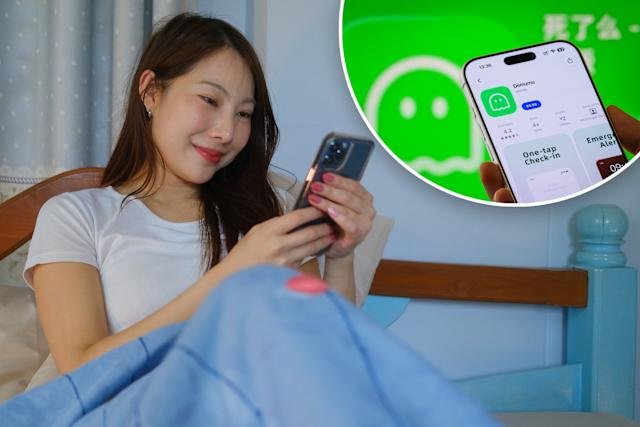
A viral app in China is spotlighting nationwide loneliness with a haunting question: “Are You Dead?”
In recent weeks, a darkly named mobile app has surged across China, tapping into a quiet but growing sense of isolation felt by millions in the world’s second-most populous country.
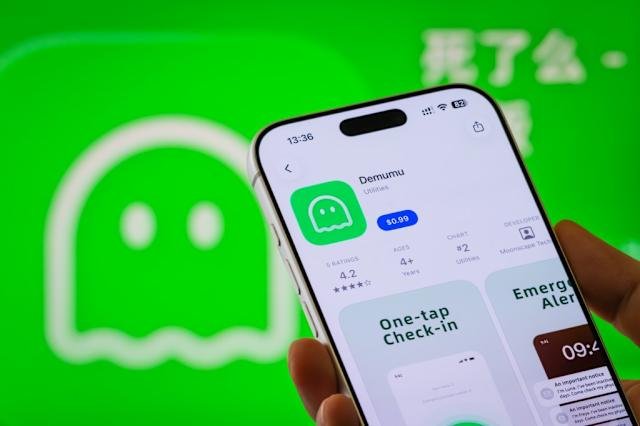
Designed primarily for people who live alone, the app operates on a starkly simple idea. Users are required to check in once a day. Miss several days in a row, and the app automatically alerts a designated emergency contact—an unsettling safeguard that many users say feels strangely comforting.
Why the App Took Off So Fast
The app’s rapid rise was impossible to ignore. It quickly climbed to the top of Apple’s paid App Store rankings, according to China’s state-run tabloid Global Times. International media coverage soon followed, triggering a surge in downloads so intense that the developers rebranded the app and introduced a subscription fee.
Behind the virality lies a deeper social reality. China, home to roughly 1.4 billion people, is seeing a sharp increase in people living alone—and many are struggling with loneliness or mental well-being.
By 2030, the country could have as many as 200 million single-person households, according to estimates cited by the Global Times from real estate research institutions.
A Society Growing More Isolated
Several forces are driving this shift. China’s rapidly aging population has led to more elderly citizens living by themselves. At the same time, decades of urban migration have drawn hundreds of millions of young people away from their hometowns in search of work, leaving behind depopulated villages and aging parents.
Among younger generations, marriage and dating rates are also declining. In 2024, China recorded its lowest number of new marriages since official data collection began in 1986. This trend mirrors a continuing drop in birth rates, despite repeated government efforts to reverse it.
Layered on top of these changes is a growing sense of anxiety, depression, and disillusionment—especially among young people facing record-high youth unemployment. Against this backdrop, it becomes easier to understand why an app with such a stark name resonated so deeply.
“Alone but not lonely, safety by your side,” the app’s App Store description read, saying it was created for solo office workers, students living far from home, and anyone choosing a solitary lifestyle.
‘The Scariest Thing Is Disappearing’
After days of intense global attention, the app appeared to vanish from both Android and Apple app stores in mainland China, according to Global Times. Journalists from CNN in mainland China were unable to find it, though it remained accessible in other regions, including Hong Kong.
Online, many users expressed gratitude for the app’s existence.
“For the first time, someone is concerned about whether I’m dead or alive,” one user wrote on Weibo.
Another commented, “This 8-yuan app is somehow the last bit of dignity for so many young people living alone. The scariest thing isn’t loneliness—it’s disappearing.”
These reactions reveal how deeply the app struck a nerve. According to Stuart Gietel-Basten, a professor of social science and public policy at the Hong Kong University of Science and Technology, the app reflects a broader sense of social atomization.
“Many young people are stuck on their own, isolated by long working hours and limited social lives,” he said. “They’re not living the social life they hoped for.”
Technology Can’t Replace Human Connection
Gietel-Basten emphasized that while the app may offer a small but meaningful safety net, it should not replace deeper social support systems.
“If technology like this prevents even one person from dying alone or harming themselves, that’s a positive,” he said. “But it should never substitute for real, meaningful human interaction.”
Some commentators also called for a softer approach, suggesting the app adopt a more encouraging name. Hu Xijin, a well-known pundit and former editor of Global Times, praised the concept but proposed renaming it “Are You Alive.”
A New Name, Same Message
The developers appeared to take the feedback seriously. They announced that the app would be renamed “Demumu” for global users and that its price would increase to 8 yuan, up from its original 1 yuan.
The new name still carries echoes of the original. According to the developers, “de” comes from the English word “death,” while “mumu” was added to make the name sound warmer and more approachable.
In an earlier statement on Weibo, the creators—three co-founders born after 1995—thanked users and media outlets for the overwhelming attention.
“We feel honored and deeply grateful to receive such widespread interest,” they said.
In the end, the app’s brief but explosive popularity revealed something far larger than a tech trend. It exposed a quiet fear shared by many: not just being alone, but being unseen.