When economic crises make headlines, the focus is usually on numbers. Markets fall, businesses struggle, investments lose value, and unemployment rises. These figures help explain the scale of a downturn, but they rarely reveal what people actually experience when financial stability begins to disappear.
Behind every economic crisis are families facing uncertainty, professionals questioning their future, entrepreneurs trying to save what they have built, and individuals carrying fears they may never openly discuss.
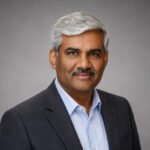
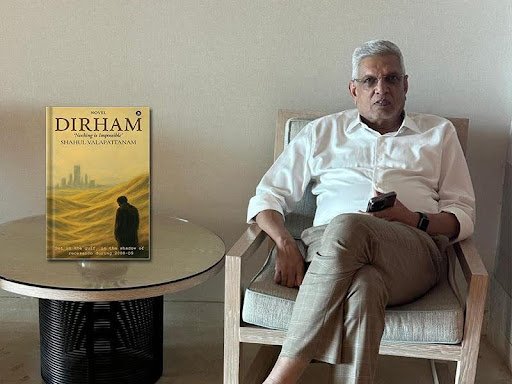
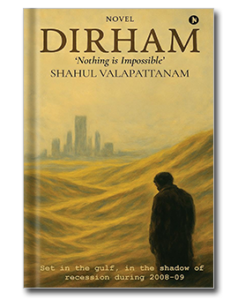
It is this deeply human side of economic uncertainty that Shahul Valapattanam explores in his novel “DIRHAM”.
Set in Dubai during a period of financial turbulence, the novel goes beyond economics to examine how changing circumstances affect people’s identities, relationships, confidence, and sense of purpose. In doing so, “DIRHAM” reminds readers that economic crises are never just about money.
When Success No Longer Feels Secure
At the center of the novel is Nandakumar, a man whose life appears stable and successful.
He has a respected position, financial comfort, social standing, and the appearance of security that many people spend years working to achieve. To those around him, he seems to have everything under control.
But when unexpected challenges begin to emerge, that sense of stability starts to weaken. Problems that once seemed manageable become increasingly difficult to ignore. Decisions carry greater consequences, and the future begins to look uncertain.
Through Nandakumar’s story, “DIRHAM” highlights a reality that many people understand but rarely acknowledge: financial security can be far more fragile than it appears.
The Ripple Effects of Economic Uncertainty
One of the novel’s greatest strengths is its ability to show that economic crises affect different people in different ways.
Rather than focusing on a single perspective, “DIRHAM” follows multiple individuals navigating uncertainty. A business owner watches years of effort threatened by forces beyond his control. Professionals struggle with anxieties they feel unable to share. Others try to maintain dignity while facing circumstances that challenge their sense of self-worth.
These experiences reflect a broader truth. Economic crises do not stop at bank accounts or balance sheets. They shape relationships, influence decisions, alter ambitions, and affect how people see themselves and others.
By presenting multiple viewpoints, the novel captures the far-reaching consequences of financial instability.
Living With Pressure No One Can See
Financial challenges often create emotional burdens that remain largely invisible.
Stress, anxiety, fear, self-doubt, and isolation can become part of everyday life when stability begins to slip away. Yet many people feel pressure to maintain appearances, making it difficult to discuss their struggles openly.
“DIRHAM” approaches these realities with empathy and honesty.
Rather than treating financial hardship as simply an economic problem, the novel examines how it affects confidence, family dynamics, friendships, and personal identity. The characters are not defined by their financial circumstances alone; they are individuals trying to protect their dignity while confronting difficult realities.
This emotional depth gives the story much of its power.
A Story That Crosses Borders
Although the novel is set in Dubai, its themes resonate far beyond the Gulf.
Across the world, people have experienced periods of economic uncertainty. Rising costs, changing job markets, business setbacks, and unexpected financial challenges have touched communities in countless ways.
As a result, the questions explored in “DIRHAM” feel universal.
How do people respond when stability begins to disappear? What happens when professional success becomes closely tied to personal identity? How do individuals maintain hope and dignity during difficult periods?
These questions connect readers to the story regardless of where they live.
The Power of Stories to Explain Complex Realities
Economic reports can explain what is happening during a crisis. Literature often helps explain what it feels like.
Through its characters and their experiences, “DIRHAM” transforms economic uncertainty into something deeply personal and relatable. Readers witness not only the practical consequences of financial challenges but also their emotional and psychological impact.
This ability to humanize larger social issues is one of fiction’s most valuable contributions.
By focusing on individuals rather than statistics, the novel encourages readers to think about economic change through a human lens.
A Writer Interested in Human Resilience
Throughout his literary career, Shahul Valapattanam has written about ordinary people confronting difficult circumstances.
His stories consistently examine how individuals adapt to change, preserve their dignity, and find strength during periods of uncertainty. In “DIRHAM”, that focus remains central.
The novel is not simply a story about financial hardship. It is also a story about resilience, relationships, and the determination to move forward when circumstances become difficult.
Rather than offering simple solutions, Shahul invites readers to reflect on what truly matters when familiar measures of success begin to lose their meaning.
Why This Novel Feels Timely
The themes explored in “DIRHAM” feel particularly relevant in a world where economic uncertainty continues to affect people across industries, communities, and countries.
Professionals, entrepreneurs, migrant workers, families, and business owners may all recognize aspects of their own experiences within the novel’s pages.
More importantly, the story reminds readers that economic events are never purely financial. They affect relationships, confidence, identity, aspirations, and the choices people make every day.
Through “DIRHAM”, Shahul Valapattanam has created a novel that speaks not only about economic change but about the people living through it. And in doing so, he demonstrates why economic crises are never just about money—they are ultimately about human lives.