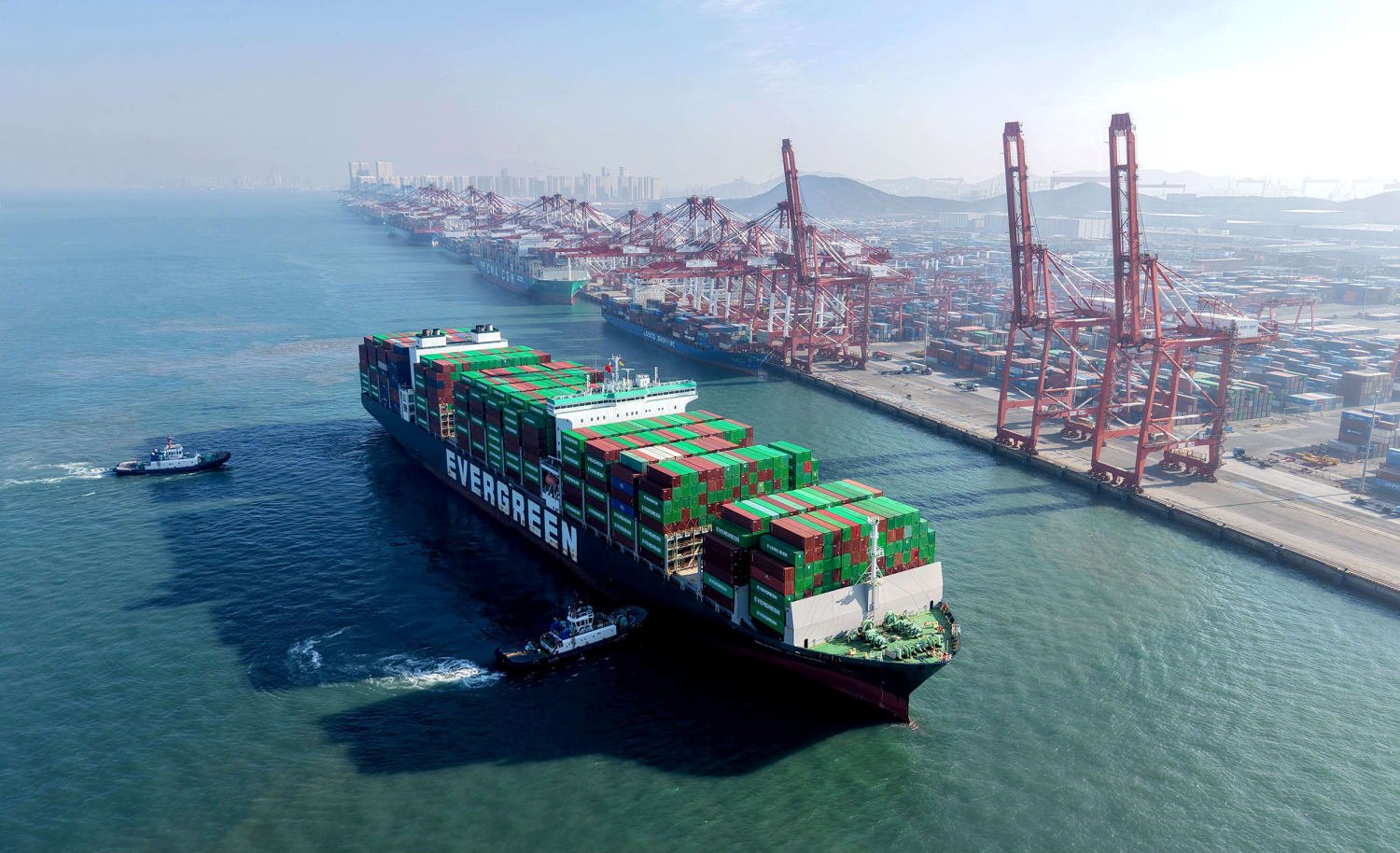
China posts a historic $1.2 trillion trade surplus, defying the impact of Trump-era tariffs, marking a watershed moment for the world’s largest manufacturing powerhouse. In 2025, China recorded the biggest trade surplus ever seen globally, underscoring how its export-driven economy has adapted—and in many ways thrived—despite sustained pressure from the United States.
The surplus, which measures how much a country exports relative to what it imports, surged to a record $1.2 trillion, a 20% increase from 2024. This milestone reflects a strategic shift by Chinese companies away from heavy reliance on U.S. consumers and toward faster-growing markets across Southeast Asia, Africa, Latin America, and beyond.
A Pivot Away From the United States
Exports to the United States—historically China’s single largest market—fell sharply in 2025. According to annual data released by China’s General Administration of Customs, shipments to the U.S. declined 19.5% compared with the previous year.
Yet that drop did little to slow China’s overall export momentum. Instead, manufacturers redirected goods to other regions, reinforcing supply chains and commercial ties built during earlier rounds of trade friction with Washington under U.S. President Donald Trump.
While Beijing is likely to portray this resilience as a strategic win, the ballooning surplus has raised alarms elsewhere. Many governments fear that a wave of lower-cost Chinese imports could overwhelm domestic industries, sharpen trade imbalances, and intensify global economic frictions.
High-Tech and Green Exports Lead the Way
Chinese officials point to robust performance in high-value sectors as evidence of the economy’s durability. Exports of high-tech goods—including industrial robots and advanced machine tools—rose 13% year over year. Even more striking, shipments of electric vehicles, lithium batteries, and photovoltaic products such as solar panels jumped 27%.
At a recent press briefing, Wang Jun, deputy administrator of the customs bureau, said China had “forged ahead” despite navigating a “complex and challenging external environment.” His remarks highlighted how innovation-heavy exports are increasingly central to China’s trade strategy.
Growth Beyond Traditional Markets
China’s export expansion was most pronounced outside the U.S. Exports to Africa climbed 26.5% in value, while shipments to the Association of Southeast Asian Nations increased 14%. Trade with the European Union rose 9%, and exports to Latin America grew 8% year on year.
This global push has not been without controversy. Several major trading partners argue that China’s practices distort competition and threaten local jobs. During a recent visit to Beijing, French President Emmanuel Macron warned that France’s widening trade imbalance with China was unsustainable, echoing calls across Europe for Beijing to boost domestic consumption rather than rely so heavily on exports.
Trade Truce, Lingering Uncertainty
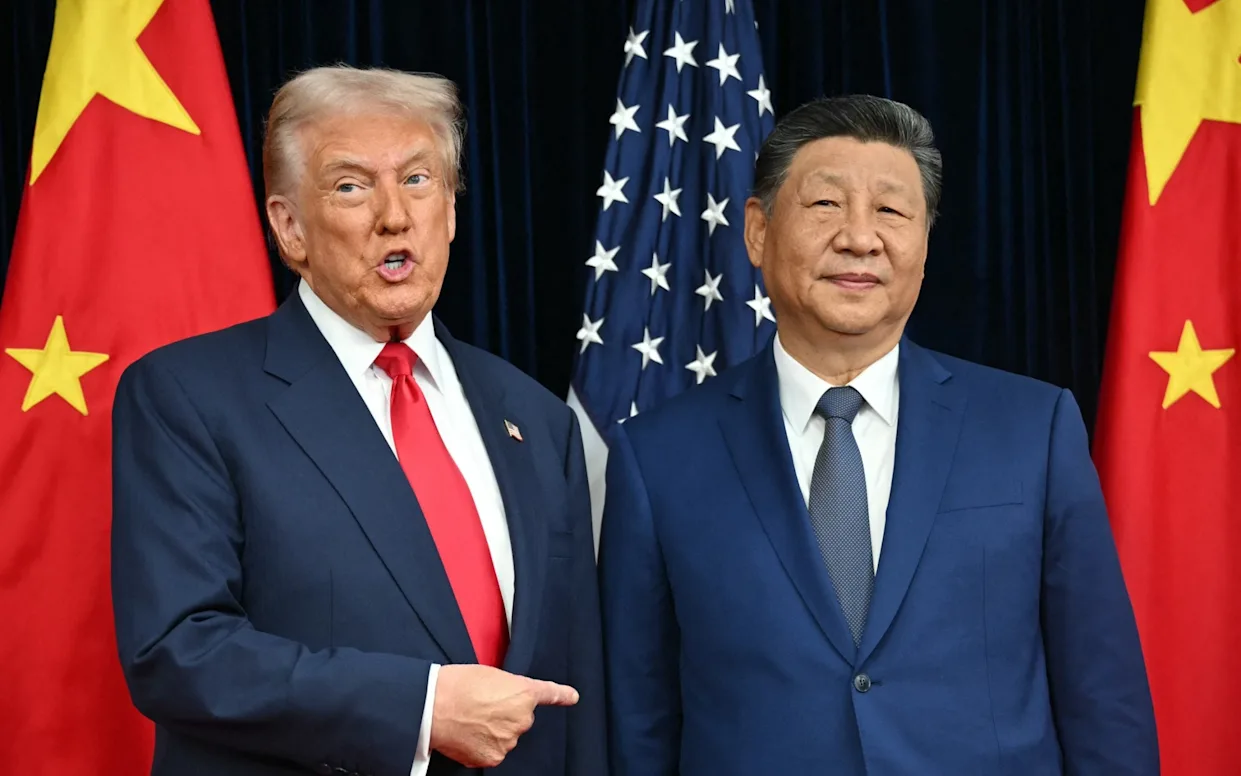
Strong export performance also gave Beijing confidence during protracted negotiations with Washington last year. Those talks culminated in October, when Trump and Chinese leader Xi Jinping agreed to a temporary truce that reduced newly imposed tariffs on Chinese goods to 20%, down from peaks as high as 145% earlier in the year.
The truce remains in place, but uncertainty looms. Trump recently warned that countries doing business with Iran could face a new 25% tariff—a move that could again put China, a key economic partner of Tehran, in Washington’s crosshairs.
Challenges Ahead at Home and Abroad
Chinese exporters appear braced for further friction as the U.S. doubles down on reshoring manufacturing and reducing dependence on China. At the same time, analysts question whether China can sustain its current export pace as more countries consider safeguards against what they describe as Chinese “industrial overcapacity.”
Domestically, reliance on exports also reflects unresolved weaknesses. A prolonged property sector crisis continues to weigh on growth, while efforts to stimulate consumer spending have fallen short. For now, China’s vast manufacturing engine remains powered more by foreign demand than by shoppers at home.
Even so, China posts a historic $1.2 trillion trade surplus, defying the impact of Trump-era tariffs, signaling that the country’s export-led model—though controversial—still has formidable momentum on the global stage.