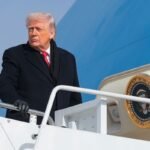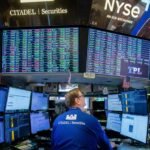
Global markets were shaken on Tuesday as investors reignited the so-called “Sell America” trade, dumping U.S. stocks, bonds, and the dollar amid rising political and trade uncertainty. Fresh tensions sparked by President Donald Trump’s standoff with European leaders over Greenland, coupled with renewed tariff threats, triggered a broad risk-off move across financial markets.
Wall Street closed sharply lower, marking its worst session in months. The Dow Jones Industrial Average plunged 871 points, or 1.76%, while the S&P 500 sank 2.06%. The tech-heavy Nasdaq Composite slid 2.39%, erasing year-to-date gains for both the S&P 500 and Nasdaq. All three major indexes posted their steepest single-day declines since October 10, a day previously rattled by Trump’s tariff warnings toward China.
Dollar Slides as Bonds and Volatility Surge
The sell-off extended beyond equities. The U.S. dollar weakened significantly, underscoring growing unease among global investors. The dollar index, which tracks the greenback against six major currencies, dropped 0.8% — its worst performance since August. In contrast, the euro climbed 0.65% against the dollar, signaling a shift in currency positioning away from U.S. assets.
Bond markets were equally unsettled. The benchmark 10-year U.S. Treasury yield rose to 4.29%, while the 30-year yield jumped to 4.92%. Both yields touched their highest levels since September, reflecting heavy selling pressure in government debt.
Krishna Guha, vice chairman at Evercore ISI, described the move as a renewed global retreat from U.S. exposure. He noted that the simultaneous fall in the dollar and rise in the euro suggests international investors are actively reducing or hedging their positions in what they see as an increasingly volatile and unpredictable U.S. market. Still, Guha cautioned that the scale and duration of this trend remain uncertain.
Asia and Europe Add to Market Jitters
Market anxiety was not confined to the United States. In Asia, a snap election announcement in Japan unsettled investors, driving Japanese bond yields sharply higher. Concerns centered on Prime Minister Sanae Takaichi’s proposal to temporarily cut food taxes despite Japan’s already massive government debt, amplifying fears in global bond markets.
U.S. Treasury Secretary Scott Bessent acknowledged the uncertainty, saying it was difficult to isolate the spillover effects from Japan. Speaking at the World Economic Forum in Davos, he added that Japanese officials were likely to take steps to reassure markets.
In Europe, stocks also struggled. The Stoxx 600 index, which tracks major European shares, fell 0.7% on Tuesday after posting its worst day since November a day earlier. Denmark’s OMX Copenhagen 20, however, managed a rebound, rising 1.13% after suffering heavy losses at the start of the week.
Fear Gauge Spikes as Tariff Threats Loom
Investor anxiety was clearly reflected in volatility measures. The VIX index — often called Wall Street’s fear gauge — surged 28%, its largest one-day jump since October. The index climbed above the key 20 level for the first time since November, signaling heightened market stress. CNN’s Fear and Greed Index also retreated, slipping from “greed” into “neutral.”
The turbulence follows Trump’s weekend threat to impose a new 10% tariff on imports from eight European countries, including Denmark, the United Kingdom, and France. The warning came amid his controversial demand that the United States acquire Greenland. With U.S. markets closed on Monday for Martin Luther King Jr. Day, Tuesday marked the first full trading session for investors to react to the news.
George Vessey, lead FX and macro strategist at Convera, said the latest developments highlight how vulnerable the U.S. economy is to sudden policy shifts. He added that lingering concerns over Federal Reserve independence — fueled by delays in appointing a new Fed chair and an ongoing probe involving Jerome Powell — are adding further pressure on the dollar.
Wall Street Braces for What Comes Next
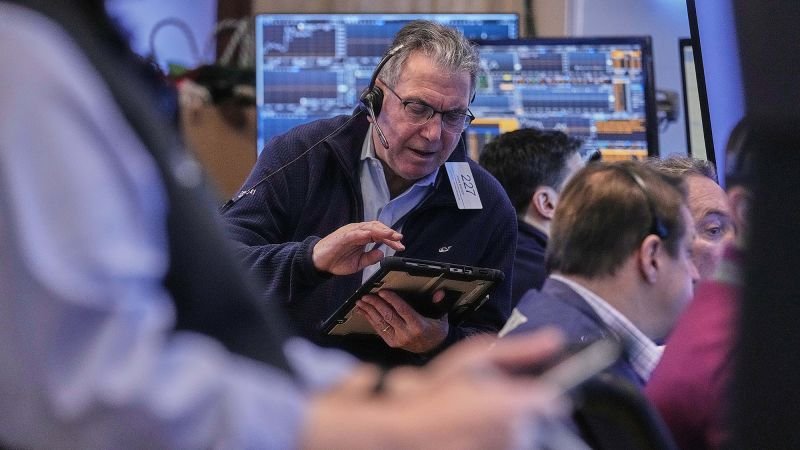
Despite the sharp moves, some analysts believe the broader damage remains contained — at least for now. Ed Yardeni, president of Yardeni Research, described the week as one filled with political wild cards that could swing markets in either direction, most of them tied directly to the White House.
Investors are closely watching the U.S. Supreme Court, which is reviewing the legality of Trump’s use of emergency powers to impose tariffs. A ruling against the administration could significantly limit future trade actions and potentially calm markets.
Guha suggested that while markets are trading defensively, many participants are betting on either a legal roadblock or a policy reversal — a phenomenon often referred to on Wall Street as “TACO,” short for “Trump Always Chickens Out.”
Still, uncertainty remains high. ING’s global head of macro, Carsten Brzeski, warned that the escalating dispute over Greenland and tariffs risks pushing the long-standing transatlantic relationship into a deep crisis, with negative consequences for both the U.S. and European economies. Evercore ISI’s Sarah Bianchi added that potential European retaliation — including the use of the EU’s powerful “anti-coercion instrument,” often dubbed the “trade bazooka” — could further inflame tensions and damage U.S. companies operating in Europe.
Safe Havens Rise, Crypto Falls
As risk appetite faded, investors flocked to traditional safe havens. Gold futures surged 3.6%, hitting a record above $4,750 per troy ounce, while silver jumped 6.3% and briefly touched a new high above $95.
Meanwhile, cryptocurrencies moved in the opposite direction. Bitcoin slid 3.9% over 24 hours, falling below $90,000 by Tuesday afternoon.
Despite the rocky start to the week, U.S. equities are not far from record territory. The S&P 500 remains roughly 2.7% below its all-time high — a reminder that while volatility has returned, markets are still balancing fear with cautious optimism.