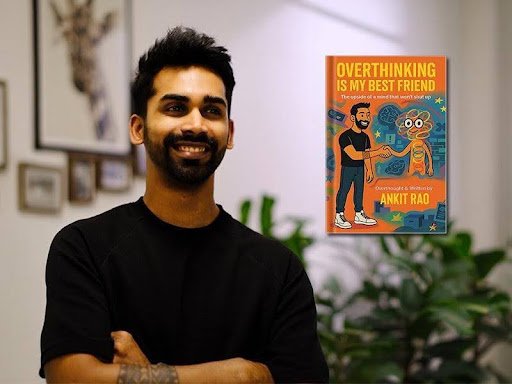
Some books begin with a publishing plan.
Others begin with a question that refuses to leave.
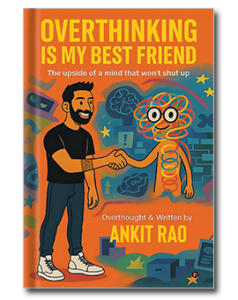
For Singapore-based technology leader and first-time author Ankit Rao, Overthinking Is My Best Friend began with a realization that stayed with him for years: the book he needed didn’t seem to exist.
Like many overthinkers, Rao spent years replaying conversations, questioning decisions, and carrying thoughts long after everyone else had moved on. He often searched for answers in books that promised clarity, confidence, or a way to stop overthinking altogether.
But what he was looking for wasn’t another set of instructions.
He wanted reassurance that there wasn’t something wrong with the way his mind worked.
Eventually, he decided to write the book he wished he had found years earlier.
The Pattern He Could No Longer Ignore
The inspiration did not come from a dramatic life event or a carefully planned writing project.
Instead, it emerged through everyday conversations.
Friends spoke about self-doubt. Colleagues shared stories about second-guessing decisions. Family members worried about choices they had already made.
Again and again, Rao noticed the same pattern.
People felt alone in their thoughts.
Many believed they were the only ones replaying conversations, questioning decisions, or carrying invisible mental checklists.
The more he listened, the more he realized that overthinking was far more common than people openly admitted.
That realization stayed with him.
Writing for the Person He Once Was
When Rao finally decided to write, he knew exactly what kind of book he did not want to create.
He wasn’t interested in writing a manual filled with rules, productivity systems, or life hacks. He didn’t want to promise readers instant clarity or present himself as someone who had everything figured out.
Instead, he wanted to create the book he had spent years searching for.
A book that felt honest.
A book that acknowledged uncertainty.
A book that allowed people to recognize themselves in its pages without feeling judged, diagnosed, or broken.
The result is a collection of stories and reflections drawn from different stages of life, including childhood experiences, professional challenges, relationships, travel, and personal growth.
The Moments Readers Will Instantly Recognize
One of the most distinctive aspects of Overthinking Is My Best Friend is its focus on ordinary experiences.
Rather than relying on dramatic success stories, Rao finds meaning in small moments that many readers will recognize immediately.
A conversation replayed on the drive home.
A decision questioned long after it was made.
A moment of doubt before taking a new step.
A thought that refuses to leave.
These experiences may seem small on the surface, yet they often shape how people understand themselves and the world around them.
The Message Beneath the Title
While the title may focus on overthinking, the book’s deeper message is about self-acceptance.
It challenges the idea that every uncomfortable thought needs to be fixed and every personal struggle needs a solution.
Sometimes understanding ourselves starts with paying attention rather than pushing thoughts away.
For Rao, writing this book was never about becoming an author. It was about creating something he wished had existed when he was asking those same questions years ago.
And if readers finish the book feeling a little less alone in their own minds, then writing the book he needed years ago may have been worth it after all.