Table of Contents
TogglePhysical AI Summit Kicks Off in Menlo Park to Accelerate US Manufacturing Robotics
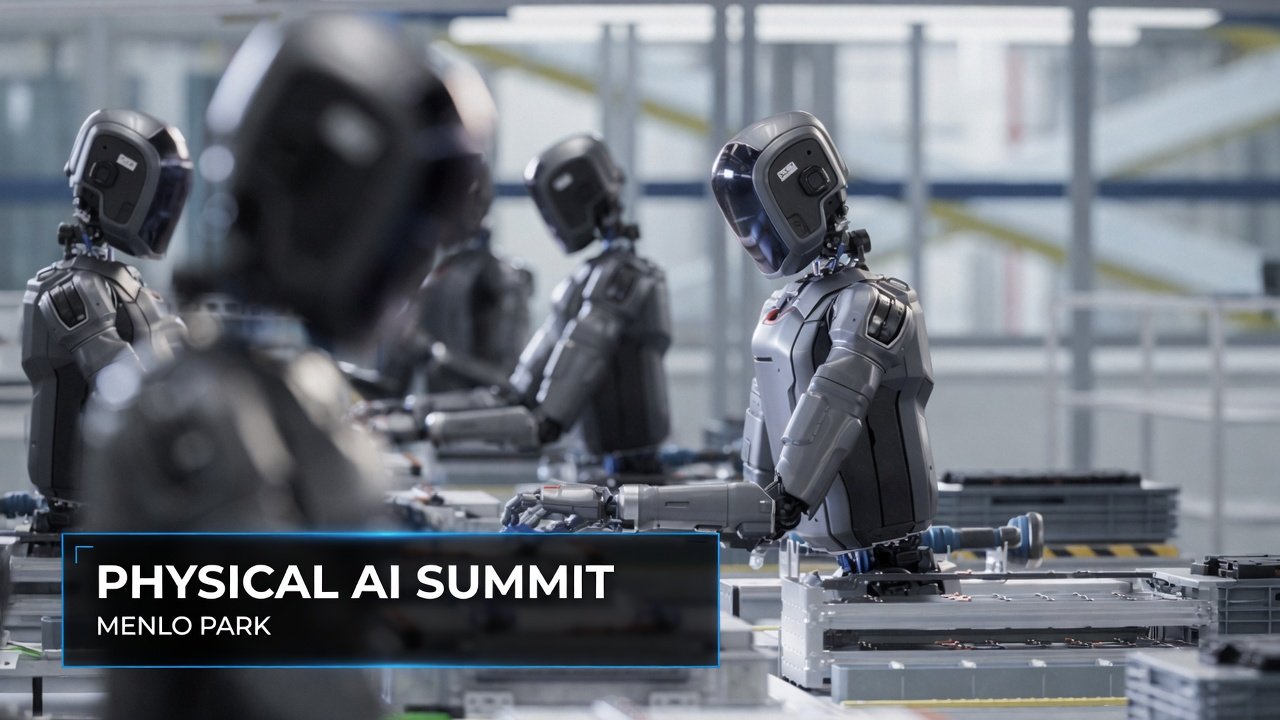
The Physical AI Summit has kicked off in Menlo Park, bringing together technology and investment players focused on accelerating the adoption of advanced robotics across the US manufacturing sector.
The event is being backed by Grid Dynamics, NVIDIA and venture firm BGV, with discussions centered on how physical artificial intelligence can move beyond software applications and into real-world industrial environments.
Grid Dynamics, NVIDIA and BGV Bring Physical AI Into Focus
The summit highlights the growing interest in Physical AI, a field that combines artificial intelligence with machines capable of sensing, reasoning and interacting with the physical world.
Unlike conventional AI systems that primarily work with digital information, physical AI technologies are designed to operate in environments such as factories, warehouses and production facilities.
Grid Dynamics, NVIDIA and BGV are using the event to bring together industry participants and technology leaders around the opportunities and challenges involved in deploying these systems at scale.
Why Physical AI Matters for US Manufacturing
US manufacturers are increasingly exploring robotics and automation as they look for ways to improve productivity, manage labor requirements and modernize production facilities.
Advanced robots powered by AI can potentially perform more complex tasks than traditional industrial machines. These systems can process visual information, respond to changing environments and carry out tasks that previously required greater levels of human intervention.
The development of physical AI could therefore expand the role of robotics across manufacturing operations, from assembly and material handling to inspection and other industrial processes.
NVIDIA’s Role in the Robotics Ecosystem
NVIDIA has become a major technology provider for AI and robotics developers through its computing platforms, AI software and simulation technologies.
For physical AI, high-performance computing is important because robots need to process large amounts of sensor and visual data while making decisions in real time.
NVIDIA’s broader robotics ecosystem also focuses on simulation and digital environments, allowing developers to train and test robotic systems before deploying them in physical facilities.
From AI Development to Real-World Deployment
One of the key themes surrounding the Physical AI Summit is the shift from developing AI models to deploying AI-powered machines in real-world environments.
Manufacturing facilities present a different set of challenges from conventional software applications. Robots must interact with people, equipment and physical objects while operating safely and consistently.
This means successful deployment requires more than an advanced AI model. It also involves robotics hardware, sensors, computing infrastructure, simulation, software integration and manufacturing expertise.
Venture Capital Interest in Physical AI
The participation of BGV also highlights the growing investment interest surrounding robotics and physical AI.
Venture capital firms have increasingly focused on technologies that connect artificial intelligence with physical infrastructure. Robotics companies can represent a significant opportunity as AI capabilities become more capable of controlling machines and interacting with physical environments.
For startups, partnerships with established technology providers and manufacturers can also help bridge the gap between prototype development and commercial deployment.
US Manufacturing Could Become a Major Testing Ground
The US manufacturing sector could become an important market for physical AI as companies invest in automation and advanced production technologies.
Factories provide controlled environments where autonomous systems can be tested, monitored and gradually integrated into existing workflows.
If deployment costs decline and robotic systems become more flexible, physical AI could eventually extend beyond highly specialized industrial applications into a wider range of manufacturing operations.
Challenges Remain for Advanced Robotics
Despite the growing momentum around physical AI, widespread deployment still faces several challenges.
Robotic systems must demonstrate reliability and safety in unpredictable physical environments. Manufacturers also need to consider integration with existing machinery, workforce training, maintenance requirements and the overall cost of deployment.
Data requirements and computing infrastructure can also become significant considerations when AI-powered robots are deployed across large industrial facilities.
The summit’s focus on deployment reflects the industry’s broader shift toward addressing these practical challenges rather than focusing solely on AI research.
Physical AI and the Next Phase of Industrial Automation
The Physical AI Summit comes as artificial intelligence increasingly moves from digital applications into the physical world.
Traditional industrial automation has generally relied on machines programmed to perform specific and repetitive tasks. Physical AI aims to make robotic systems more adaptable by allowing them to perceive their surroundings, interpret information and respond to changing conditions.
For manufacturers, this could create new possibilities for flexible production and automation.
The involvement of Grid Dynamics, NVIDIA and BGV also reflects the increasingly collaborative nature of the physical AI ecosystem, where technology companies, startups, investors and manufacturers all have roles in bringing robotics systems into commercial environments.
Frequently Asked Questions
1. What is the Physical AI Summit?
The Physical AI Summit is an event focused on advancing the development and deployment of artificial intelligence-powered robotics in physical environments, particularly manufacturing.
2. Who is behind the Physical AI Summit?
Grid Dynamics, NVIDIA and venture firm BGV are among the organizations behind the summit in Menlo Park.
3. What is Physical AI?
Physical AI refers to artificial intelligence systems designed to perceive and interact with the physical world through technologies such as robotics, sensors and autonomous machines.
4. How can Physical AI help manufacturers?
Physical AI can support manufacturing through advanced automation, robotic material handling, inspection, assembly and other industrial processes.
5. What role does NVIDIA play in Physical AI?
NVIDIA provides computing, AI software and simulation technologies used by developers building AI-powered robotics systems.
6. Why is robotics important for US manufacturing?
Robotics can help manufacturers automate repetitive or complex processes, improve operational efficiency and modernize production facilities.
7. What does BGV contribute to the Physical AI ecosystem?
BGV brings a venture investment perspective, supporting technology companies and startups developing emerging technologies such as robotics and artificial intelligence.
8. How is Physical AI different from traditional AI?
Traditional AI often operates primarily in digital environments, while Physical AI is designed to perceive and act in the physical world through machines such as robots.
9. What challenges face Physical AI adoption?
Key challenges include safety, reliability, infrastructure requirements, integration with existing manufacturing systems, workforce training and deployment costs.
10. Why is Menlo Park significant for the Physical AI Summit?
Menlo Park is part of the broader Silicon Valley technology ecosystem, making it a natural location for an event bringing together AI, robotics, investment and technology companies.